Design for the Fossil Pit
Several ergonomic challenges were presented in the reconsideration of PRI’s existing Fossil Pit design. Among them were to formulate design recommendations for the height, shape, size, and overall weight of a now moveable fossil pit. Further recommendations regarding wheelchair accessibility required thought as did handle and wheel design. The following sections will outline our design process from an ergonomic perspective throughout the course of this semester.
Height considerations
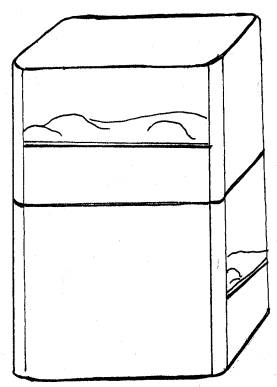
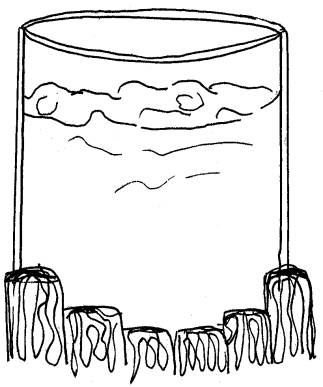
Immediately, several ergonomic problems were identified in considering the existing design. The first was that of height. The existing pit was set at a fixed height limiting both very small users and wheelchair users from accessing the pit comfortably. Similarly, tall users had to bend significantly to examine shale for the presence of fossils. That being said, we wanted to address the height of the pit so as to allow all users to comfortably search for fossils. To do so, we originally offered the following concept sketches:
Each sketch addressed the issue of height slightly differently. Sketch #1 illustrates a fixed, multilevel design where as sketch #2 illustrates a uni-level design with a sloping floor. Each design featured rounded edges as a safety consideration, a recommendation that was preserved in our final design. Both designs feasibly accommodated the height requirements of both short and tall users. However, since neither design offered knee clearance, they did not accommodate wheelchair users. Additionally, we felt that although these designs offered more user heights that the existing design, the design was still limited. We therefore needed to search for alternatives to addressing height. Below are two slightly different variations of completely adjustable work tables:
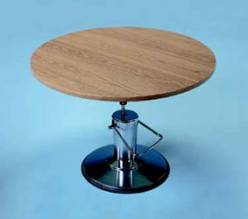
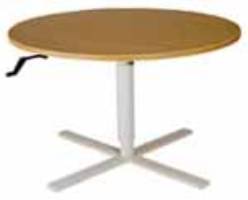
Each worktable is adjustable through the height range of 32-47 inches enabling seated, standing, and even sit/stand work. In addition, each design offers wheelchair users knee clearance. The above designs do, however, differ in the way that the work surface height is adjusted. The rounded base design features foot-actuated height adjustment whereas the second design features a hand-actuated crank. From an ergonomic standpoint, the recommended design would be the one that requires the least amount of effort from the user given the most acceptable posture. Since a foot design would clearly require less effort, we would make it our recommendation. We also recommend that a locking mechanism be employed so as to avoid accidental height adjustments to the fossil pit during use.
At this point, our design accommodated users of multiple heights including those with a further requirement of knee clearance. Being able to accommodate multiple user heights simultaneously however remained an issue. To address this problem we proposed splitting the pit into varying heights as show below.
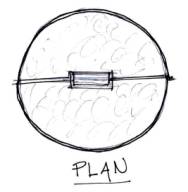
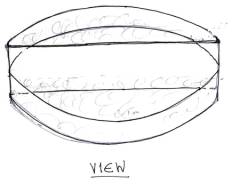
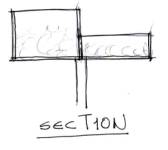
Splitting the bin area into two equal sections with different heights would permit multiple user groups access to the pit simultaneously. More specifically, we thought that this design would be particularly accommodating for families with small children as it would now be possible for both the parents and children to comfortable access the pit. Splitting the pit into bins also had weight implications since the overall weight of each bin was lowered and each was now less awkward to carry.
Reach Considerations:
Reach has been one of the main considerations from the onset of the PRI design. Because PRI intends to have visitors from completely different ends of the spectrum in terms of size, reach, and ability, the fossil pit must accommodate all users so that each visitor can comfortably and safely search for and find a fossil of their own. The team gathered information regarding reach distances and reach envelopes.
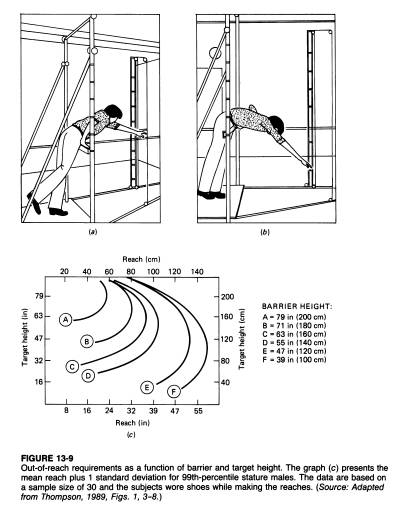
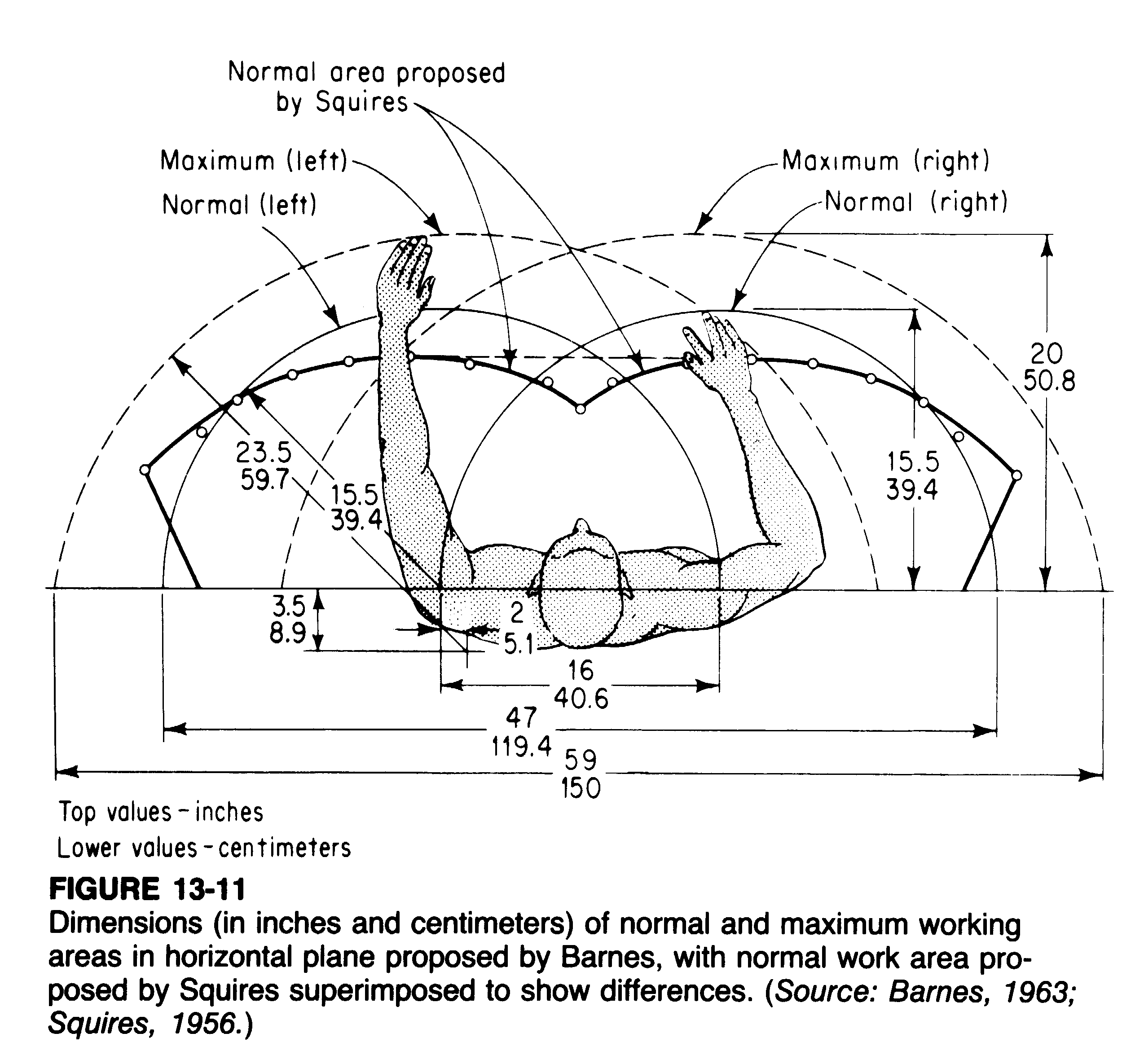
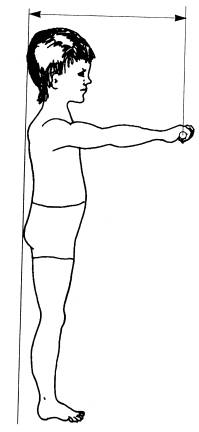
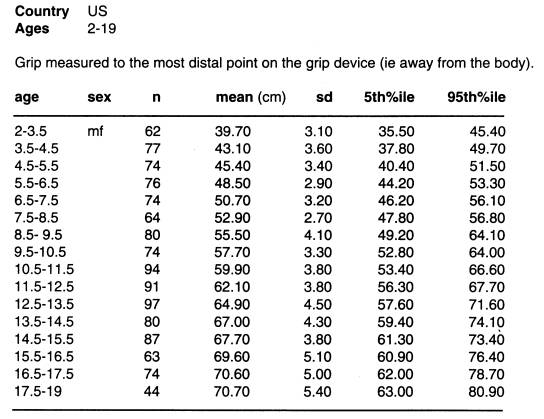
We wanted to design for the largest reach distance such that two men in the 95th percentile would be able to find fossils simultaneously without interference. This would not hinder smaller reaching visitors as it is not necessary that each person be able to reach into the middle of the pit to find a fossil. Consistent with this line of thinking, we used anthropometric data below and found that a radius of 80.9 cm would in fact accommodate all users comfortably.
Pushing Considerations
Our team was concerned that the fossil pit would grow quite heavy when filled with shale so we wanted to provide the design team with maximum recommended pushing forces. To do this, we used Snook tables. Snook tables provide initial and sustained recommended maximum pushing forces. They take into account the distance of push (in meters), the frequency of the push, the vertical distance from the floor to the users hands (in centimeters), and the percentage of the industrial population able to perform the desired push. Given these requirements, out team had to make several assumptions. Our assumptions are summarized in the table below:
|
Average distance of push |
30.5 meters |
|
Average frequency of push |
Once every 8 hours |
|
Vertical distance from floor to hands |
89cm ~ 35 inches |
|
Percentage of population able |
90% of the total female population |
Given these assumptions we calculated that the maximum initial forces were not to exceed 18kg or 40lbs and the maximum sustained forces were not to exceed 9kg or 20lbs.
Bin Materials
The materials used for the bin are important as they have implications for carrying weight, maintenance, durability, and cost. Many materials were considered and evaluated: plastic, metal alloys, plastic and metal foams, wood, and steel. The following characteristics are attributed to each:
|
Plastic |
Other Metal Alloys / Aluminum
|
Metal or Plastic Foams
|
100% Structural Steel
|
Wood
|
|
Lightweight
|
Lightweight |
Very lightweight |
Highly resistant to abuse |
Lightweight |
|
Easily cleaned |
Durable |
Very strong |
Long life |
Inexpensive |
|
Waterproof |
Can be inexpensive |
Expensive |
Greater load bearing capacity |
Absorbs water |
|
Custom color available |
Easily molded |
Waterproof |
||
|
Heavy |
Wheel Considerations
In order to make the unit the most flexible, ease of mobility is an important consideration. Wheels were researched and examined in terms of materials, dimensions as well as the way in which they will be attached to the pit. The most practical and common wheel materials, we found included polyurethane, plastic, rubber and steel. Pneumatic wheels utilize air pressure to aid in their movement across surfaces. Standard wheel dimensions include: 5" x 1.5," 8" x 2," and 4" x 1.25."
Other characteristics that the team found to be important to the wheel design are the inclusion of ball bearings to minimize friction, utilization of a self-locking mechanism, swivel mechanisms, and tapered edges to further minimize friction. Some examples of common wheel designs are shown below:


Handle Considerations
We found that handles on the bins are important for the transport of the bins to where they will be refilled and emptied. Because there is a considerable distance from the fossil pit docking station, handle design is important. Through research, the team has found design recommendations to apply to the bin handle design. Each should be at least 10-15 cm long to allow for all hand sizes. The handle thickness should be 3-4 cm in diameter (Drury, 1980), the optimum thickness being 3.8 cm (LoPresti, 1971). The handles should be cylindrical and slightly thickened centrally without any finger contouring. We recommend a textured, rubberized surface for better grip comfort, but a washable surface.
When examining the handle design more closely, we found that retractable handles or ones that become flush with the bins would be beneficial in the prevention of snags and injury. We found that these handles could couple as a locking mechanism for the multiple bin design, making the overall pit more secure.
Click here for information about wheelchair and disability considerations